Author: David Zybin
Technical review: David Zybin, Laser Safety Officer and NYS DOL Class B Mobile Laser Operator
Last technically reviewed: August 25, 2026
Injection molds accumulate release-agent films, polymer deposits, outgassing residue, carbonized material, and corrosion. The operational problem is not simply getting the mold clean; it is restoring an acceptable surface condition without creating unnecessary teardown, secondary contamination, or damage to critical mold features.
Why Mold Cleaning Becomes a Production Decision
Traditional mold-cleaning workflows can require some combination of stopping production, removing tooling, cooling, manual cleaning, blasting, chemical treatment, inspection, reinstallation, and restart. The actual downtime varies widely by mold size, material, press configuration, contamination, access, and the cleaning method.
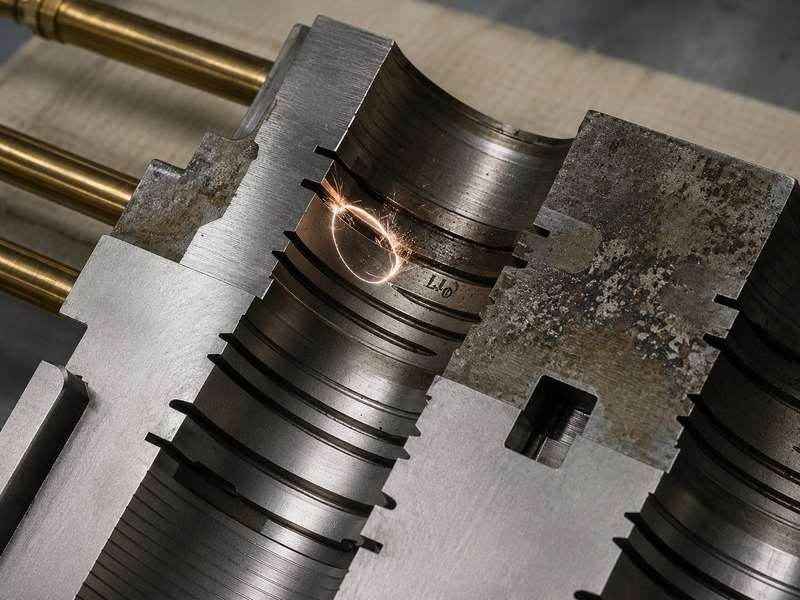
Laser cleaning can change that workflow because it is non-contact and does not introduce abrasive grit. In suitable applications, a mold or tooling surface may be cleaned in place or with less disassembly. Whether in-press or hot-surface cleaning is appropriate must be determined from the actual equipment, temperature, residue, geometry, guarding, ventilation, laser-safety controls, and plant procedures.
How the Process Window Is Established
Pulsed laser cleaning works by coupling laser energy into the unwanted surface layer. The useful operating window sits between effective contaminant removal and unacceptable alteration of the substrate. Research on pulsed-laser cleaning shows why wavelength, pulse duration, fluence, repetition, atmosphere, and substrate properties matter to both cleaning effectiveness and damage threshold.
For production tooling, that means the correct procedure is not “set one power level and clean every mold.” The process should start with the mold material, coating or texture, residue type, critical dimensions, and a test area where appropriate. Acceptance criteria can include visual condition, texture preservation, residue removal, dimensional requirements, and readiness for the next production step.
Common Mold and Tooling Targets
- Release-agent and process-film buildup on cavity and core surfaces.
- Polymer and outgassing deposits in accessible vents, parting areas, and tooling features.
- Carbonized residue from selected rubber, silicone, and polymer processes.
- Localized rust and oxidation on compatible tool steels and metal tooling.
- Maintenance cleaning where abrasive-media migration would create a production concern.
What Laser Cleaning Does Not Eliminate
Laser cleaning does not eliminate the need for extraction, housekeeping, guarding, training, or plant-specific approval. Removed material and laser-generated process emissions must be controlled based on the residue being removed. OSHA identifies both beam and non-beam laser hazards, so the work plan must address the actual Class 4 laser operation rather than treating “no abrasive media” as equivalent to “no hazard.”
Where the Downtime Advantage Can Come From
The commercial advantage is often workflow reduction: less abrasive setup, no blast-media recovery, targeted cleaning, and the possibility of cleaning accessible surfaces with less tooling movement. The size of that advantage is job-specific. A production trial is the best way to compare the laser workflow against the plant’s current cleaning method using the same mold, acceptance criteria, labor accounting, and restart requirements.
A Useful Pilot Test
Select one representative mold or tooling section. Record the existing cleaning workflow, time out of production, labor, consumables, cleanup, and inspection steps. Then run a controlled laser-cleaning trial with agreed acceptance criteria. Compare the complete process, not just minutes of beam-on time.
Related Services and Applications
See our laser injection mold cleaning service, manufacturing applications, scheduled maintenance programs, and project gallery. For the broader downtime question, read Why Manufacturing Downtime Traces Back to Surface Preparation.
Primary and Technical Sources
Author and Editorial Review
Written by David Zybin, author for Tri-State Laser Cleaning covering laser cleaning, surface preparation, rust and coating removal, and industrial maintenance.
Technical review: Tri-State Laser Cleaning, based on current service capabilities, test-patch methodology, project-specific OSHA-aware planning, and ANSI Z136.1-based laser safety practices.
Reviewed July 14, 2026.