Services / Laser Die-Casting Mold Cleaning
Foundry & Die-Casting Tooling
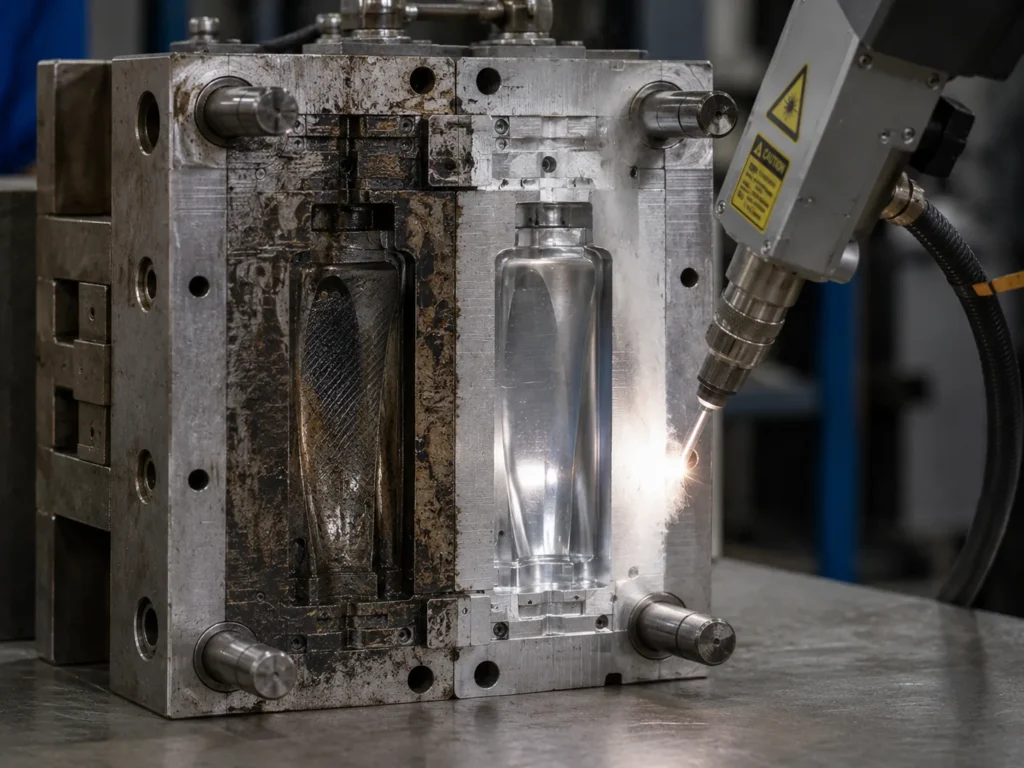
Laser Die-Casting Mold Cleaning
Targeted laser cleaning for die-casting molds, inserts and accessible die surfaces with release-agent buildup, carbon and selected oxides. Tri-State Laser Cleaning reviews production tooling and shutdown work across New Jersey, New York and Pennsylvania.
Die Surfaces and Deposits We Evaluate
Die maintenance often involves several different conditions: deposited release agent, carbonized residue, oxidation, adhered casting metal and tool wear. Distinguish these conditions before choosing a cleaning process.
- Accessible cavity faces, inserts and parting surfaces.
- Release-agent deposits and selected carbonized process residue.
- Localized oxidation and thin surface contamination where the required finish can be retained.
- Defined areas needed for die inspection or maintenance assessment.
Aluminum soldering, thick adhered metal, heat checking and eroded die features are not automatically resolved by laser cleaning. Heavy deposits may require another removal method, and damaged tooling may require repair.
Respect Die Coatings and Critical Features
Send the tool-steel grade, heat treatment, coating and relevant finish or dimensional requirements. A trial should establish whether cleaning can remove the deposit without unacceptable changes to the tooling surface.
Edges, vent lands, thin features and coated inserts require particular attention. A clean appearance alone does not verify dimensions, coating condition or production readiness. The die shop or customer’s authorized representative defines and checks the endpoint.
Access and Shutdown Planning
We consider in-machine cleaning only when the die can open safely and the site can provide isolation, access and a controlled laser work area. Removal, cooling or partial disassembly may be required. Deep cooling circuits, blind holes and hidden channels are outside the beam’s line of sight.
- Map the scope: identify die numbers, surfaces, deposits and excluded features.
- Trial the process: confirm residue removal and the required surface condition.
- Clean during the agreed stop: coordinate tool handling, access and extraction.
- Inspect before restart: complete the customer’s dimensional, finish or production checks.
Choose the Method by Deposit and Geometry
Laser cleaning can target selected deposits without introducing abrasive media. Blasting, mechanical cleaning, chemical treatment or die-shop repair may be more suitable for another condition. Compare methods on equivalent access, finish and acceptance requirements.
The quote should include setup, die handling, residue collection and inspection time. Removal speed depends on deposit type and thickness as well as geometry; an assumed square-foot rate is not enough to plan a shutdown.
Build Cleaning Into Planned Maintenance
Connect die-casting mold cleaning to a Maintenance Contract that follows planned die changes and shutdowns. Use deposit history, production volume and tool condition to select candidate dies and review visit frequency.
Record the die ID, surfaces cleaned, observed condition and customer release checks. Cleaning can be coordinated with NDT surface preparation when a qualified inspector specifies and approves the inspection areas. Inspection and repair remain separate responsibilities.
Review visit scheduling, contract pricing factors and visit records when defining recurring work.
Frequently Asked Questions
Can you remove aluminum soldering from a die?
It requires a separate assessment. Thin or localized adhered material may merit a trial, but thick bonded metal and die damage may need mechanical removal or repair. Do not assume release-agent cleaning parameters are suitable for soldering.
Can you clean dies while the machine is running?
The agreed scope must include a production stop and a safe work arrangement. Online operation is not assumed. Tool temperature, isolation, access and laser controls determine whether in-machine cleaning is practical.
Can the laser clean cooling channels?
Only surfaces the beam can reach and that can be safely processed are candidates. Internal cooling passages and blind channels generally require a different method.
What should I send for a quote?
Include die photographs, approximate area, tool material and coating, deposit history, critical features, machine access, temperature conditions and shutdown availability. Identify who will approve the trial and release the die.
Related Services and Applications
Technical References
These application references inform the scope review. The agreed trial and acceptance checks establish suitability for your tooling.
Request a Die-Casting Mold Review
Send photographs, tooling details, residue information and your available maintenance window. Include any finish, inspection or facility release requirements so we can assess the scope.