Services / Laser Rubber Mold Cleaning
Rubber & Elastomer Tooling
Laser Rubber Mold Cleaning
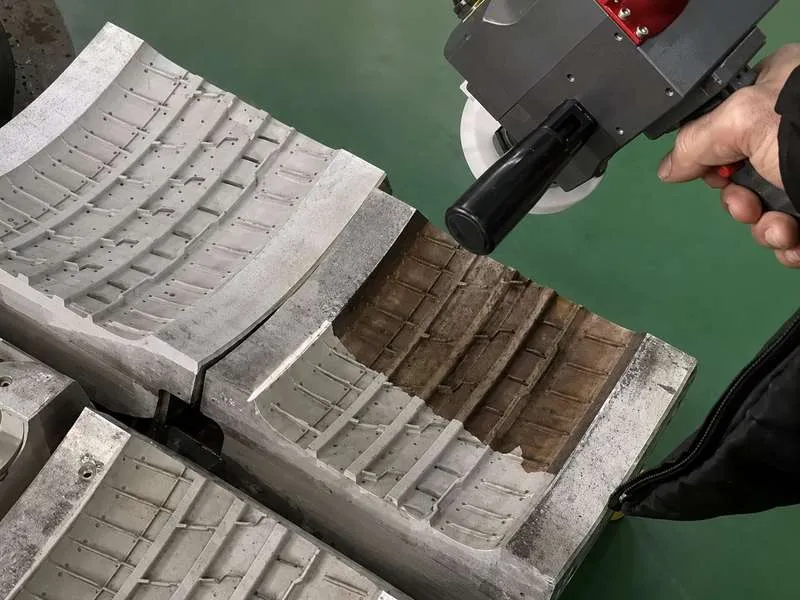
Laser rubber mold cleaning for manufacturers managing cured-rubber residue, mold-release buildup and carbon on metal tooling. Tri-State Laser Cleaning reviews compression, transfer and injection-molding applications across New Jersey, New York and Pennsylvania.
Rubber Molds and Residues We Evaluate
Rubber compounds and release agents can leave deposits on cavity faces, parting lines and accessible vents. Cleaning should address the deposit without changing the tool finish or a feature that controls the molded part.
Candidate applications include metal molds used for seals, gaskets, vibration-control parts and other elastomer components. EPDM, nitrile and natural-rubber production are established laser-cleaning application areas; the actual compound, additives and release system still need review.
- Compression and transfer mold cavity surfaces and inserts.
- Accessible rubber injection-mold faces, parting lines and vent lands.
- Selected release-agent films, rubber residue and carbonized deposits.
- Steel or aluminum tooling with a finish suitable for a controlled trial.
Protect the Finish That Controls the Part
A laser does not automatically distinguish every deposit from every tool surface. Mirror finishes, chrome plating, textures and other coatings need specific evaluation. Thick bonded buildup, tiny holes, deep recesses and undercuts may require another cleaning step or method.
The beam needs access to the surface. We consider in-press cleaning only where safe mold access and a controlled laser work area are possible. Tool removal, opening, cooling or partial disassembly may be necessary.
A Rubber-Mold Cleaning Visit
- Review the tool: identify the metal, coating, finish, rubber compound, release agent and cleaning history.
- Establish a trial area: agree on removal limits, finish checks and who approves the result.
- Clean the approved surfaces: use the accepted approach with extraction, access controls and a defined production stop.
- Inspect and release: complete the customer’s tool inspection and any molding checks required before restart.
Laser Cleaning vs. Dry Ice and Manual Cleaning
Laser cleaning adds no abrasive blast media and can target selected areas. Dry ice, solvents, manual cleaning or an off-line process may be a better fit for another residue or geometry. Compare a representative trial using the same cleanliness and finish requirements.
Include removal and reinstall time, access, residue collection, consumables, labor and production interruption in the comparison. Do not select a laser solely on a claimed cleaning rate.
Build Cleaning Into Planned Maintenance
Build rubber-mold cleaning into a Maintenance Contract around observed buildup, tool changes and planned shutdowns. Start with identified molds and an accepted cleaning endpoint, then use visit records and production feedback to refine the schedule.
Define which cavities, inserts and vent lands are included; who opens and releases the tool; and which finish or trial-part checks are required. A change in compound, release agent or tool coating should trigger a scope review.
Review visit scheduling, contract pricing factors and visit records when defining recurring work.
Frequently Asked Questions
Can you clean silicone or other elastomer molds?
The rubber compound is only one part of the assessment. Send the compound and release-agent information together with the metal, plating, coating and finish of the mold. Silicone and other elastomer applications require a representative trial before committing to a production process.
Will laser cleaning restore blocked vents?
Accessible vent lands may be candidates. Do not assume the beam can reach deep passages or hidden surfaces. Cleaning does not repair worn, damaged or incorrectly sized vents.
How often should rubber molds be cleaned?
Use the tool’s actual buildup and product-quality history. The interval depends on compound, release chemistry, temperature, cycles and acceptance requirements. Review the interval after initial visits instead of assuming one schedule fits all molds.
What is needed for a rubber-mold cleaning quote?
Provide photographs, dimensions, cavity count, tool metal and finish, residue details, current cleaning method, site location and available shutdown window. Include the acceptance checks and whether the tool will be mounted or on a bench.
Related Services and Applications
Technical References
These application references inform the scope review. The agreed trial and acceptance checks establish suitability for your tooling.
Request a Rubber-Mold Cleaning Review
Send photographs, tooling details, residue information and your available maintenance window. Include any finish, inspection or facility release requirements so we can assess the scope.