Laser Safety • Site Control • Environmental Protection
Laser Cleaning Safety Procedures and Worksite Protocols
Every project begins with planning, hazard identification, controlled access, equipment checks, and a site-specific work plan. Our goal is to protect people, property, equipment, and the surrounding environment while completing the cleaning safely.
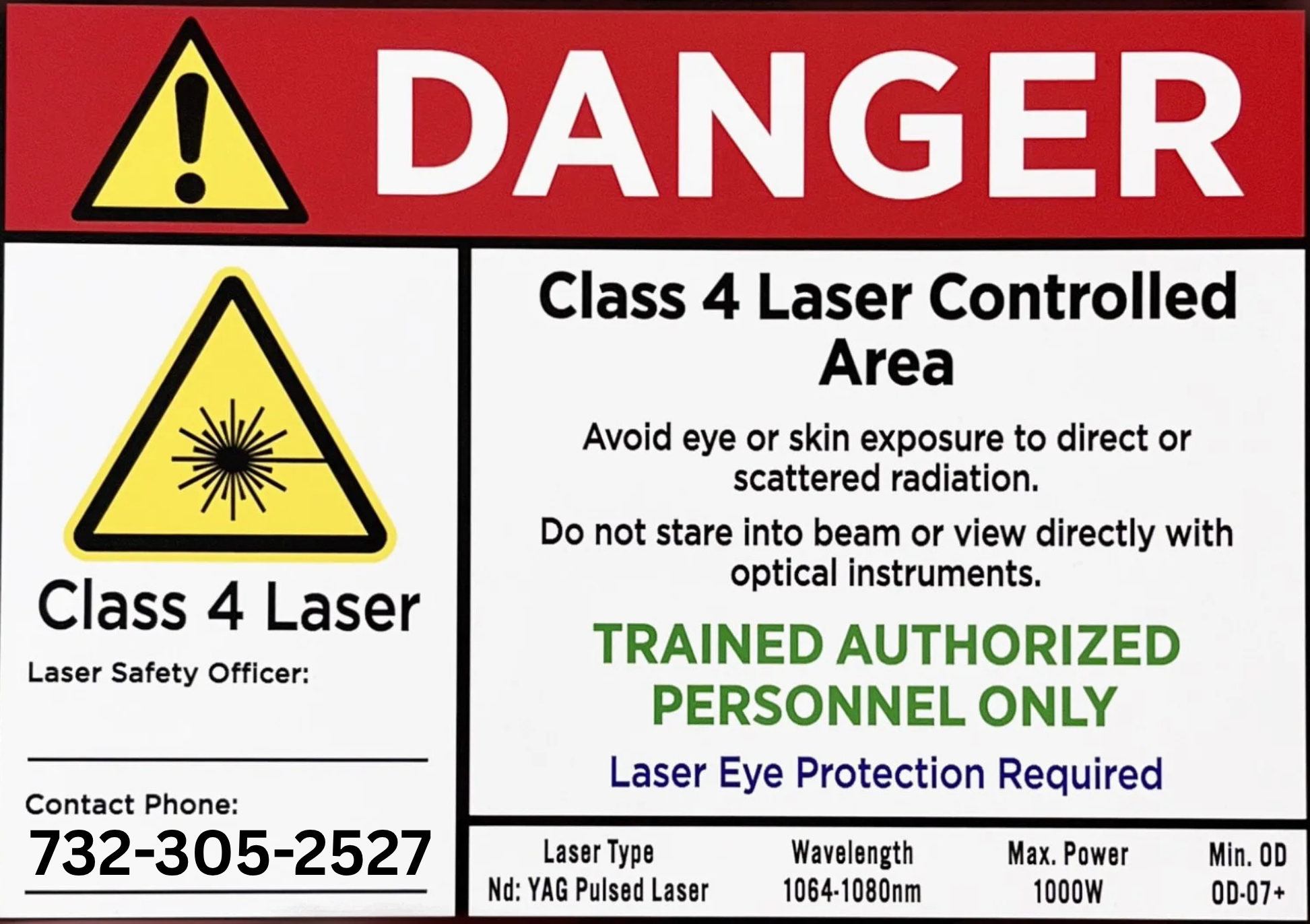
Laser Cleaning Safety Procedures at a Glance
- Every job begins with a site-specific hazard assessment.
- Active work takes place inside a restricted laser-controlled area.
- Eye protection, extraction, fire readiness and residue controls are selected for the actual material and site.
- A test area confirms cleaning performance and helps protect the substrate.
- The area is inspected and reopened only after shutdown and cleanup are complete.
Safety is planned before the laser is activated
Laser cleaning is a precise, non-contact process, but it still requires disciplined control. Before work begins, we evaluate the equipment, surface, coating, work area, ventilation and nearby people. We also review reflective surfaces and combustible materials.
Laser-controlled work area diagram
A controlled area separates active laser work from employees, occupants, visitors, vehicles, and sensitive equipment. The exact layout changes with each site.
Laser Cleaning Safety Controls
| Control | Purpose | Typical implementation |
|---|---|---|
| Laser-controlled area | Keeps unauthorized people away from optical hazards. | Barriers, signs, designated entry point and controlled access. |
| Laser-rated eye protection | Protects against direct and reflected laser energy. | Eyewear selected for the equipment wavelength and operating conditions. |
| Beam-path management | Reduces uncontrolled reflections and exposure pathways. | Controlled working angle, stand-off distance and reflective-surface protection. |
| Ventilation and extraction | Captures smoke, dust, coating residue and vapor near the source. | Local source capture, filtration and site ventilation based on the material. |
| Fire prevention | Controls heat, hot residue and combustible exposure. | Combustible removal, surface monitoring and accessible extinguishing equipment. |
| Residue containment | Prevents removed contamination from spreading. | Containment, collection, cleanup and handling based on coating requirements. |
Our Laser Cleaning Safety Procedures
PPE, fume control, and fire prevention
| Hazard | Control category | Selection basis |
|---|---|---|
| Optical exposure | Laser-rated eye protection | Wavelength, output and task conditions. |
| Fume or particulate | Extraction, ventilation and respiratory controls | Material removed and exposure potential. |
| Facility hazards | Site-required PPE | Access conditions and customer rules. |
Personal protective equipment
Personnel within the controlled area must wear laser-rated eyewear. Gloves, protective clothing, respiratory protection, hard hats, safety footwear, hearing protection, high-visibility garments, or fall protection may be required based on the material and facility rules.
Fume and particulate management
Laser cleaning can convert surface contamination into fine particulate, smoke, or vapor. We position extraction close to the treatment point. Then we select ventilation and filtration for the coating, contamination, location and potential exposure.
Fire prevention
Laser cleaning does not use an open flame, but concentrated energy can heat the surface and removed residue. We control combustible materials and continuously monitor the work area. Shutdown and fire-control equipment remain accessible.
Fume, fire, and residue control decision path
Material matters. Rust, oil, paint, soot, mold residue, industrial coatings, and unknown deposits create different hazards. Controls are based on what is being removed—not only on the laser equipment.
Safety characteristics by surface-cleaning method
Every method requires task-specific controls. This table summarizes common operational differences; it is not a substitute for a project hazard assessment.
| Method | Airborne material | Chemical / water use | Surface contact | Primary control focus |
|---|---|---|---|---|
| Laser cleaning | Fine particulate, smoke or vapor depending on the coating | No process water or cleaning chemicals | Non-contact | Optical control, extraction, fire readiness and residue containment |
| Abrasive blasting | High dust and spent media potential | No chemicals; wet systems may use water | Direct abrasive impact | Dust containment, respiratory protection and media cleanup |
| Chemical stripping | Vapors and contaminated residue | Chemical products and often rinse water | Chemical contact | Chemical compatibility, ventilation, skin protection and waste handling |
| Dry ice blasting | Dislodged contamination; carbon dioxide accumulation indoors | No water or cleaning chemicals | Particle impact | Ventilation, noise, projectile control and residue cleanup |
| Manual grinding | Dust, sparks and metal particles | Typically none | Direct mechanical contact | Guarding, sparks, noise, dust and substrate removal |
Standards, training, and customer coordination
We base our procedures on recognized laser-safety practices, manufacturer instructions, applicable workplace requirements and the customer’s facility rules. Documentation can include a scope review, hazard discussion, work-zone plan, insurance information, and customer-specific contractor paperwork.
Lead-based paint and other regulated coatings require project-specific containment, worker protection, cleanup, and waste handling. Specialized industrial, municipal, historic, food-production, pharmaceutical, or occupied-facility work may require additional controls.
No webpage can replace a site-specific hazard assessment. We determine final procedures after reviewing the actual equipment, material, work area and customer requirements.
Questions About Laser Cleaning Safety Procedures
Is laser cleaning safe around employees or building occupants?
It can be performed safely when the work area is properly controlled. Occupied facilities may require scheduling, barriers, ventilation, or temporary relocation of nearby personnel.
Does laser cleaning create fumes?
It can create smoke, fine particulate, and vapor depending on the material being removed. We select extraction and ventilation controls for the actual application.
Can laser cleaning start a fire?
Any process that concentrates energy on a surface can create heat. Combustible control, surface monitoring, appropriate settings, and accessible fire-control equipment are part of the work plan.
Can it be used on lead-based paint?
Lead-based coatings require specific controls, containment, worker protection, cleanup, and waste handling. The project must be evaluated before work begins.
Related services
Review our laser rust removal, lead-safe paint removal, weld-ready surface preparation, fire and smoke damage restoration, restoration, project gallery, and project review pages.
Laser cleaning site safety checklist
Use this summary during early project planning. We review the material and work area before confirming final controls.
Need a project-specific safety review?
Send photos, material details, the job location, and any facility requirements. We’ll review the application and discuss the controls needed for your site.