Author: David Zybin
Technical review: David Zybin, Laser Safety Officer and NYS DOL Class B Mobile Laser Operator
Last technically reviewed: August 25, 2026
Lead-bearing coatings change a surface-preparation project because the decision is no longer only about removal speed. The property type, work scope, worker exposure, containment strategy, waste characterization, substrate, and finish requirements can all affect the method and total project cost.
For qualifying paid renovation work that disturbs painted surfaces in applicable pre-1978 housing and child-occupied facilities, the U.S. EPA Renovation, Repair and Painting (RRP) Rule requires certified firms and lead-safe work practices. Construction work where employees may be occupationally exposed to lead is also covered by OSHA’s construction lead standard. Those are different regulatory frameworks, and neither should be reduced to a simple statement that one cleaning method is automatically compliant.
Start With the Project, Not the Tool
Before selecting sandblasting, chemical stripping, laser cleaning, or another method, document the substrate, coating history, suspected contaminants, occupied-space constraints, required surface profile, downstream coating system, and who will manage waste characterization and disposal. For unknown older coatings, testing and project-specific review should come before a removal plan.
Option 1: Abrasive Blasting
Abrasive blasting can be highly productive on robust substrates and large open areas, especially when a specified anchor profile is required. On lead-bearing coatings, however, the project must account for airborne lead exposure, containment, cleanup, and the spent abrasive plus removed coating. OSHA’s construction lead standard specifically covers removal of lead-containing materials and requires employers to assess employee exposure where the standard applies.
The waste stream should be characterized rather than assumed. EPA’s Toxicity Characteristic Leaching Procedure (TCLP), Method 1311, is one test used in hazardous-waste determinations. Whether a particular waste is hazardous depends on the actual material and applicable waste rules, not simply on the fact that blasting occurred.
Option 2: Chemical Stripping
Chemical stripping can be useful where abrasion is undesirable or geometry makes mechanical access difficult. The tradeoffs can include dwell time, chemical handling, residue removal, substrate compatibility, ventilation, and management of the removed coating and spent stripping material. Porous masonry and historic materials may require additional evaluation because cleaning chemistry can interact with the substrate.
Option 3: Laser Cleaning
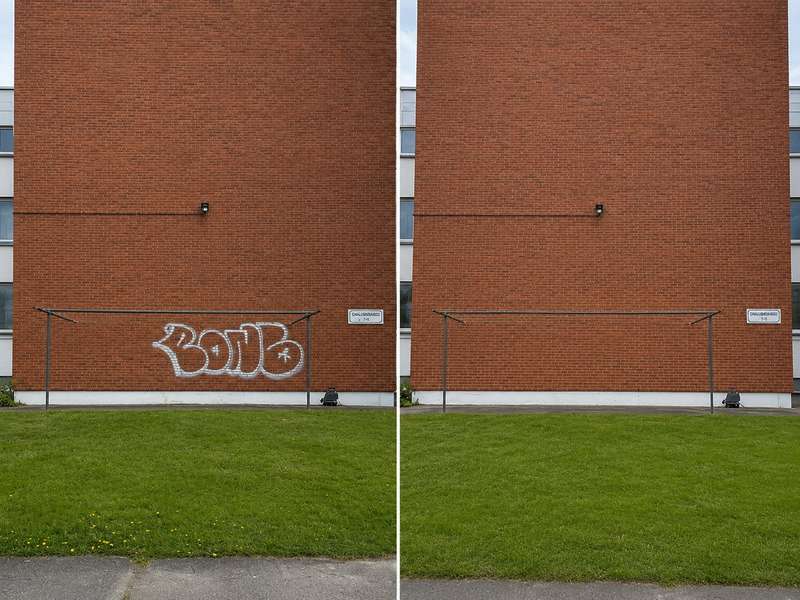
Laser cleaning is a dry, media-free removal process. It does not add blast grit or chemical stripping agents to the waste stream. That can be commercially valuable where added media, cleanup, access, or protection of a sensitive substrate is a major project constraint.
It does not make lead or other contaminants disappear. Removed material and process emissions still require appropriate capture, worker protection, housekeeping, characterization, and disposal based on the actual project. Laser parameters also need to be matched to the coating and substrate, with test patches used where appropriate.
A Better Comparison for Lead-Bearing Work
| Project Factor | Abrasive Blasting | Chemical Stripping | Laser Cleaning |
|---|---|---|---|
| Added process media | Abrasive media | Chemical stripping product | No added abrasive media or stripper |
| Waste stream | Removed coating plus spent abrasive | Removed coating plus spent chemical material | Removed material and captured process residue |
| Surface profile | Can intentionally create profile | Typically limited mechanical profile creation | Must be matched to the specified downstream surface requirement |
| Best fit | Large robust surfaces and profile-driven specifications | Selected coatings and geometries where chemistry is acceptable | Selective removal, sensitive substrates, media-sensitive sites, and targeted mobile work |
Where Tri-State Laser Cleaning Fits
Tri-State Laser Cleaning is an EPA Lead-Safe Certified Firm for applicable RRP-covered renovation work. We evaluate laser cleaning as one possible method based on the property type, coating, substrate, access, required finish, and project controls. See our lead-safe paint and coating removal service, work for construction contractors and real-estate and property teams, and our project gallery.
For method selection, also read How to Choose Between Laser Cleaning and Sandblasting and The Hidden Cost of Sandblasting Containment on Lead Paint Projects.
Primary Sources
Author and Editorial Review
Written by David Zybin, author for Tri-State Laser Cleaning covering laser cleaning, surface preparation, rust and coating removal, and industrial maintenance.
Technical and compliance review: Tri-State Laser Cleaning. The company is an EPA Lead-Safe Certified Firm for applicable RRP-covered work and uses project-specific OSHA-aware planning and ANSI Z136.1-based laser safety practices.
Reviewed July 14, 2026.