Services / Laser Composite Mold Cleaning
Metal Tooling for CFRP & Fiberglass
Laser Composite Mold Cleaning
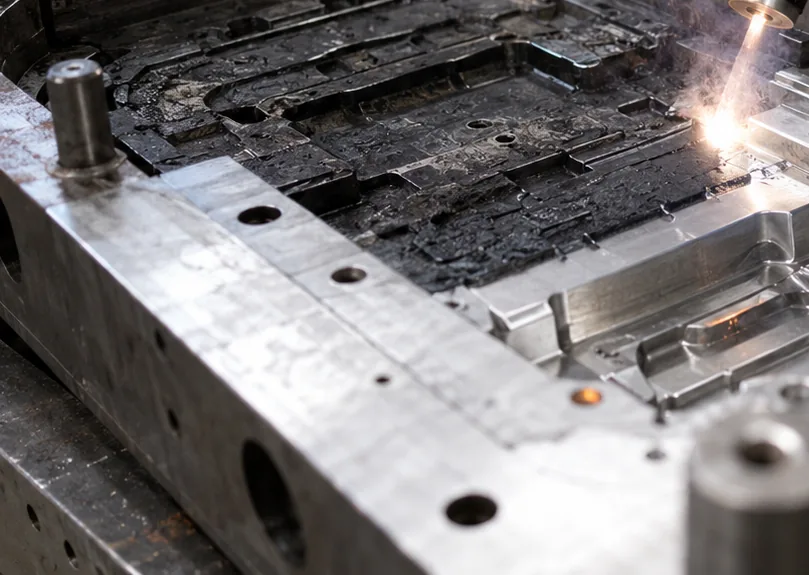
Laser cleaning for metal composite molds used in carbon-fiber and fiberglass production. Tri-State Laser Cleaning evaluates resin and release-agent buildup on steel, aluminum and nickel tooling across New Jersey, New York and Pennsylvania.
Clean the Tool Surface Between Production Runs
Release-agent accumulation and resin residue can interfere with the intended condition of a composite mold. The cleaning scope starts with the tooling material and the surface the next layup or molding operation requires.
- Metal mold faces and accessible inserts used for CFRP and glass-fiber composite production.
- Selected resin, process residue and release-agent deposits.
- Parting surfaces and defined areas needing cleaning before tool inspection or an approved release-system reset.
This service concerns production molds and tooling. Cleaning a finished composite part, composite-built mold, gelcoat or polymer tool surface requires a separate material-specific assessment.
Metal, Coating and Finish Determine Suitability
Steel, aluminum and nickel tooling are established application areas for laser mold cleaning. Suitability still depends on the exact alloy, coating, polish, texture and residue. Do not assume a process accepted on one mold transfers unchanged to another.
Review a representative area for residue removal and unacceptable changes to the tool finish. Where the customer requires it, use surface measurements, release-system checks or trial-part inspection to establish acceptance. Customer or engineering approval controls the return to production.
Plan the Cleaning Around the Release System
- Identify the buildup: provide resin chemistry, cure conditions, release products and prior cleaning methods.
- Define what remains: identify any coating, sealer or release layer that must be retained.
- Approve a controlled trial: assess the cleaned area against the tool’s required condition.
- Prepare for the next run: perform any customer-required final cleaning, sealer or release-agent application before production.
Laser cleaning is a surface process requiring line of sight. Undercuts, hidden areas and damaged tooling may need additional work beyond the cleaning scope.
Compare the Complete Tool-Cleaning Process
Laser cleaning may be useful for localized residue removal without introducing blast media. Manual solvent cleaning, dry ice and other tool-cleaning processes should be compared against the same finish and release requirements.
Include the time for safe access, extraction, tool handling, final preparation and acceptance. The selected process should support the required tooling condition rather than rely on a general promise of faster cycles or longer tool life.
Build Cleaning Into Planned Maintenance
A Maintenance Contract for composite tooling can coordinate cleaning with planned tool changes, layup schedules and shutdowns. Identify each mold, the approved cleaning area, the release-system responsibilities and the customer’s acceptance checks.
Track deposit condition and cleaning results over successive visits. Reassess the process when resin chemistry, release products, cure conditions or tooling surfaces change. For aerospace work, the customer’s engineering and quality requirements remain part of the agreed scope.
Review visit scheduling, contract pricing factors and visit records when defining recurring work.
Frequently Asked Questions
Can you laser-clean a mold made from composite material?
This page covers metal tooling used to manufacture composite parts. Composite, epoxy and polymer tooling need a separate assessment; a process suitable for a metal mold may alter those materials.
Can laser cleaning remove mold release without damaging the tool?
Selected release-agent deposits may be removable. Preservation of polish, coating and texture must be demonstrated on the actual tool or an approved representative sample. No universal damage-free result is assumed.
Is this an approved aerospace process?
There is no blanket approval for every aerospace tool or component. The customer supplies the applicable specifications, process authority and approval criteria before work proceeds.
What affects the price?
Tool area, geometry, metal and coating, deposit thickness, safe access, extraction, handling and the required inspection affect scope and cost. Send photographs and the available maintenance window for review.
Related Services and Applications
Technical References
These application references inform the scope review. Suitability for your tooling is established through the agreed trial and acceptance checks.
Request a Composite-Tooling Review
Send photographs, tooling details, residue information and your available maintenance window. Include any finish, inspection or facility release requirements so we can assess the scope.