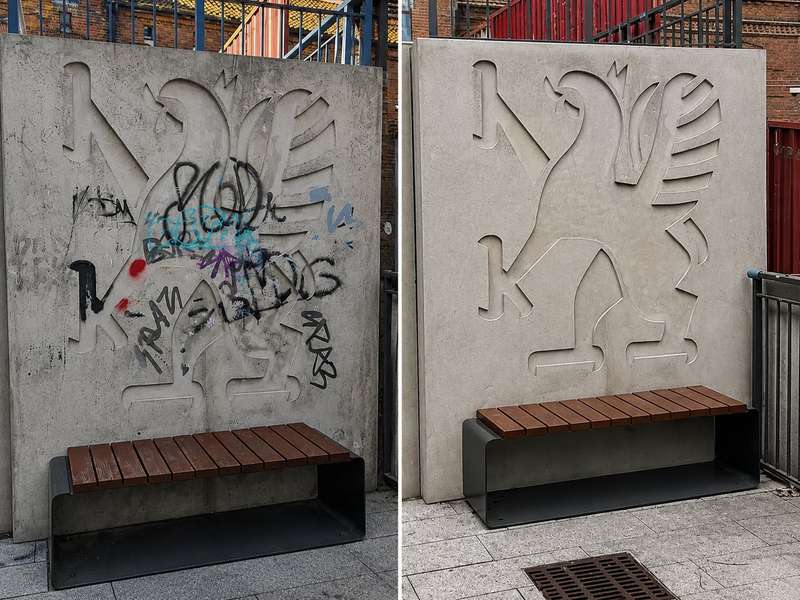
Historic Graffiti Removal
Spray paint on a landmark facade is a preservation problem, not a cleaning problem. Sandblasting strips the paint and the original surface together. Chemical strippers drive pigment deeper into porous stone and leave permanent ghosting. Laser cleaning removes the paint and nothing else.
See Total Cost for This Job TypeThe Problem with Traditional Methods
Historic and protected surfaces carry legal and financial weight. A landmark facade, a bronze monument, or a piece of public art cannot be blasted or chemically stripped without damaging the material a property owner is obligated to protect. Once the surface is etched or the pigment is driven into the pores, the damage is permanent.
Most graffiti crews work one way: pressure wash, solvent, or paint over. On a cinderblock wall that is fine. On 100-year-old limestone, brownstone, terra cotta, or cast bronze it destroys the value the owner is trying to preserve.
Why Laser for Historic Graffiti Removal
Zero Substrate Damage
The beam is tuned to the coating, not the stone. The original brick, stone, bronze, or terra cotta reflects the energy and stays intact. No etching, no pigment ghosting.
Landmark-Review Documentation
Before-and-after records, method statements, and substrate condition notes formatted for landmark and historical commission review.
No Water, No Chemicals
No solvents driven into porous stone. No water forced into masonry joints. No hazardous runoff into drains or landscaping.
EPA RRP Lead-Safe Certified
Pre-1978 lead-bearing paint removed legally without containment tenting or abrasive blast media. Full credential stack on every job.
How We Do It
The pulsed fiber laser vaporizes the coating layer. The stone, brick, bronze, or terra cotta underneath reflects the energy and stays intact. No abrasion. No solvents. No water forced into the masonry.
We test a patch in an inconspicuous area first, tune the laser to the substrate, then remove the paint layer by layer under controlled power. The original surface, tooling marks, and patina survive.
You receive before-and-after records, a method statement, and substrate condition notes suitable for landmark and historical commission review.